HOW DAVID BECKHAM TURNED A HAIRCUT INTO A GLOBAL FASHION PHENOMENON!
In football, you are supposed to be remembered for goals. David Beckham gave the world something else to remember: a haircut.
In 2000, Beckham walked onto the pitch with a hairstyle that seemed almost too rebellious for football: a close-shaved head with a strip of longer hair running down the middle. The Mohawk. It lasted only a short time, but the influence lasted much longer.
Beckham was already one of the biggest footballers in the world, but his appearance had become almost as newsworthy as his performances. Every new haircut became an event. Blonde, buzz cut, curtains, faux hawk, cornrows, shaved head. The footballer seemed to treat his own appearance like a constantly changing fashion collection. And the strange thing was that people copied him.
FROM THE PITCH TO THE BARBER
The Beckham effect wasn't confined to football fans. Barbers began receiving requests from teenagers who wanted “the Beckham.” His hairstyles appeared in magazines, newspapers and television shows. Suddenly, a footballer's haircut was influencing what an entire generation wanted to look like.

This was one of the earliest examples of something that is now completely normal: athletes becoming fashion influencers before Instagram existed. There were no reels, no TikTok and no athlete mood boards. Yet Beckham could introduce a hairstyle simply by appearing at a match. His hair had become part of his brand.
THE REAL GENIUS: HE KEPT CHANGING
Beckham understood something that most athletes hadn't. Recognition doesn't always come from consistency. Sometimes it comes from reinvention.
Most sports stars traditionally built a fixed visual identity: the same haircut, the same uniform, the same image. Beckham did the opposite. He constantly changed, and every change generated conversation.
One of his most famous transformations was the bleached blonde look he debuted around the time England qualified for the 2002 World Cup. Suddenly, blonde hair wasn't just a celebrity trend. It became a football trend. Then came the faux hawk, followed by the shaved head, longer hair and the infamous cornrows. Each one produced headlines.
The hairstyle itself became almost like a logo.
BEFORE THE TUNNEL WALK
Today, athletes understand the power of the entrance. NBA players arrive at arenas dressed like runway models. Footballers are photographed walking into stadiums in carefully styled outfits. Tennis players arrive in custom silhouettes. The journey from the car to the changing room can generate millions of views.
Beckham was doing a primitive version of this decades earlier. He understood that the athlete doesn't start performing when the whistle blows. The performance starts when people see you.
THE UNEXPECTED FASHION LESSON
The Beckham phenomenon also reveals something fascinating about sportswear. Fashion doesn't always begin with clothing. Sometimes it begins with hair, posture, accessories, tattoos, shoes or even the way an athlete walks into a stadium.
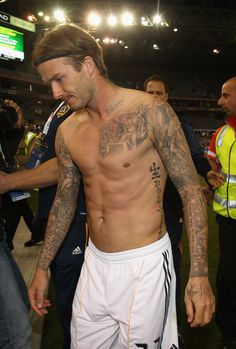
A sports personality can turn something completely ordinary into a cultural signal. Beckham didn't invent the Mohawk. He didn't invent blonde hair. He didn't invent changing hairstyles. But he had something far more powerful: global attention.
And when global attention meets a strong visual identity, even a haircut can become a trend.
THE BECKHAM FORMULA
There is a reason brands still want athletes with personality. Performance tells us what an athlete can do. Style tells us who they are.
Beckham mastered both. His football career made him famous, but his constant reinvention helped make him culturally relevant. Eventually, fashion became part of his business empire, with collaborations and partnerships spanning luxury fashion, sportswear and grooming.
That is the bigger lesson hidden inside the haircut. The most influential athlete isn't always the one wearing the most expensive clothes. Sometimes, it's the one who walks onto the pitch looking completely different and makes everyone else want to do the same.
Beckham didn't just play football. He changed what a footballer was allowed to look like.


Comments